

Adapting to renal replacement therapy - transplantation
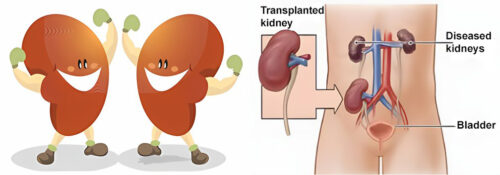
After a successful kidney transplant, the recommendations for a healthy, balanced diet apply. Ensure a regular meal rhythm and enjoy your meals. You may experience food cravings and ravenous appetite. Stable blood sugar levels help to reduce cravings. Therefore, try to find a regular meal rhythm, avoid snacks in between meals and organize your meals in a balanced way.
Binge eating and less exercise are often partly responsible for weight gain after a transplant.
Fluid

Your transplanted kidney needs sufficient fluids. You should therefore drink between 1.5 and 3 litres per day, mainly water or unsweetened drinks, depending on your thirst. Sweetened drinks (also in the form of fruit juice) can increase cravings and are also an unnecessary calorie intake, which favours weight gain.
Make up for fluid loss through sweating with additional drinks. It doesn’t matter why you sweat, e.g. because of sport or of high summer temperatures. The main thing is that you replace the fluid loss with sufficient fluids.
You can also check the colour of your urine. It should always be clear and light in colour. If your urine is yellow and rather dark, you have not drunk enough.
Avoiding foods that can influence the effects of immunosuppression
 You will be taking immunosuppressants after the transplant. Interactions may occur if grapefruit or products made from grapefruit are consumed.
You should therefore avoid consuming grapefruit, grapefruit juice and other preparations made from grapefruit
Food hygiene
Taking immunosuppressants prevents the immune system from rejecting the organ, but also reduces the body’s ability to fight infections.
To avoid infection (e.g. salmonellosis or toxoplasmosis), you should pay attention to good hygiene in the preparation and storage of food.
It is recommended that you do not eat raw eggs, meat and fish or non-pasteurised dairy products. If there are any exceptions, it is essential to pay attention to the origin (hygiene) and freshness of the products.
Prevention of a decrease in bone density

The development of osteoporosis (loss of bone mass) can be promoted by taking cortisone.
Regular intake of sufficient calcium is therefore very important after a transplant. Calcium is found in many different food groups. Dairy products, soya products, seeds and kernels, green vegetables (e.g. kale, broccoli), wholemeal products and certain mineral waters (e.g. Eptinger, Farmer, Adelbodner) all have a high calcium content.