
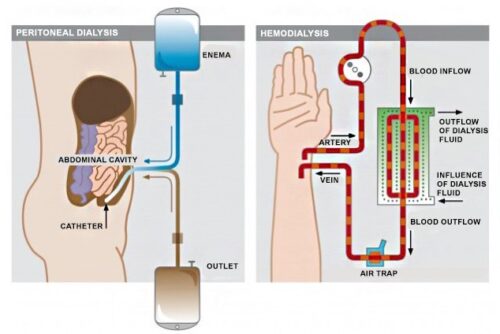
Adaptation to renal replacement therapy – HD (Hemodialysis), PD (Peritoneal dialysis)
When you start renal replacement therapy (haemodialysis or peritoneal dialysis), the situation changes significantly for you, as do the recommendations regarding your diet.
Increased energy and protein requirements

During dialysis, energy and protein requirements are increased due to various metabolic changes, and this places a strain on your body. An adequate supply of protein is therefore particularly important. In contrast to the previous phases of kidney disease, the protein requirement is now also increased. Make sure you eat protein-rich food such as meat, fish, eggs, milk and dairy products, pulses or tofu at every meal. It also makes sense to include a protein-rich snack between meals, especially if your appetite is reduced.
Information on liquid nutrition: If the additional energy and protein requirements cannot be met by eating natural foods, there is the option of liquid nutrition. As the name suggests, this is a drinkable form of food. It provides a lot of energy and protein in a small volume. Depending on the type of drinkable food, a bottle contains 250 – 450 kcal and 10 – 30 g protein. This is roughly equivalent to the energy and protein content of half to a whole meal. Nutritional drinks are covered by health insurance for certain indications. Your doctor or nutritionist can provide you with further information.
Notes on peritoneal dialysis: the glucose-containing dialysate must be included in the energy intake. Therefore, the oral intake of rapidly absorbable carbohydrates should be reduced as much as possible. Quickly absorbable carbohydrates include sweet drinks, fruit juices, glucose and certain sweets.
Fluids

Fluid regulation is an important function of the kidneys. If kidney function is impaired, fluids can no longer be excreted at all or only partially. This can lead to fluid accumulation between the body cells (oedema), heart problems (due to high blood pressure) and breathing difficulties.
This excess body water must then be removed during dialysis, whereby only a certain amount of fluid can be removed per hour.

The permitted amount to drink depends on the amount of urine that is still being excreted. The rule of thumb here is: daily amount of urine in millilitres + maximum 500ml = permitted amount to drink/fluid intake. To control the amount you drink, it can help to keep a log and use small containers for fluid intake.
There is a balance between water and salt in the body, which is necessary to maintain all bodily functions. With every gram of salt you eat, you feel more thirsty. If you reduce your salt intake, you can also reduce the feeling of thirst. Please refer to the tips in the chapter ‘Salt-reduced diet’. Drinks and food that are very high in sugar can also increase the feeling of thirst.
If you still feel thirsty, the following tips can help:
- Suck sugar-free sweets and chew gum
- Suck small ice cubes (possibly made with syrup, lemon juice or fruit tea)
- Use lemon/peppermint
- Refresh your mouth with a mouth spray
- There are also special sprays to combat dry mouth à Ask at the dialysis centre
- Avoid dry and overheated rooms. Use a humidifier in the months when the heating is on
Phosphate and potassium-reduced diet
During dialysis, the amount of urine is often reduced or even non-existent. This is why potassium and phosphate are a particular issue. Your treatment team will check your electrolytes regularly and give you feedback if restrictions are necessary. Please also note the recommendations in the ‘Potassium and phosphate-reduced diet’ section.
Medication support

In addition to diet, it is also possible to reduce the intake of potassium and phosphate with medication:
Phosphate binders are used to bind phosphate from food in the digestive tract and thus reduce its absorption into the blood. Phosphate binders such as Renvela® or Renacet® are therefore only effective if they are taken at the same time as phosphate-containing food.
The phosphate binders should therefore be taken with food. The amount of phosphate binders is adjusted by the specialist according to the phosphate content of your meal and the laboratory values. If you take several phosphate binders per meal, they should be divided over the meal (depending on the duration of the meal). It may also be necessary to cover snacks with phosphate binders. Discuss this with your specialist.
It is also important to always have the phosphate binders with you so that meals eaten out can also be covered. It is best to have a small container/can with you at all times – for example in your trouser pocket or handbag.
Potassium exchange resins such as Resonium® or Veltassa® exchange sodium or calcium for potassium in the intestine and thus increase potassium excretion in the faeces. They can be used in particular in the long interval between dialysis sessions, if other nutritional measures are not sufficient and they are prescribed by your specialist.